Before a barrel: the unseen engineering

A barrel is just a number. Behind it lies much more: knowledge of the subsoil, engineering, infrastructure, and decisions that must be precise at every moment.

Before it is ready for delivery, crude oil begins a journey thousands of meters underground. Upon reaching the surface, it may be accompanied by water and gas; from there, each element follows a defined path that includes separation, processing, measurement, and verification.


What is ultimately counted is only the visible part of a much more complex chain.

Understanding what happens beforehand allows us to observe production from another perspective: not only because of the volume obtained, but because of everything that must work to make it possible.


Much more than extracting oil

It all begins at the reservoir. From there, the fluids pass through the geological formations until they reach the wells, through which they rise naturally or with assistance, until they reach the facilities where they will be processed.


There, a crucial phase begins: separating its components and handling each according to its characteristics. The crude oil continues its processing; the associated water receives the treatment required for its subsequent reinjection, while the gas can be incorporated into energy recovery schemes.


Each current follows a specific circuit, supported by specialized equipment, defined parameters, and continuous monitoring.


Water: an essential part of the operation

Outside of the industry, the role of water associated with hydrocarbon extraction is rarely known.


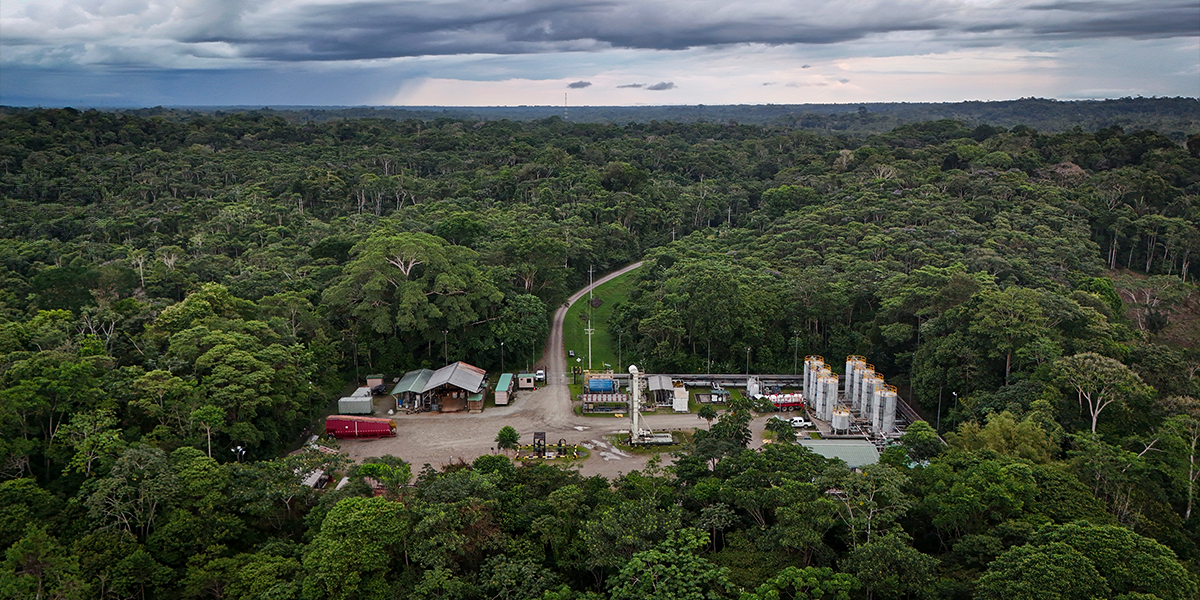
Its handling requires suitable facilities and specific procedures. In Block 53, Gente Oil Ecuador has wells designated for reinjection, through which this fluid is returned to formations authorized for that purpose.


This practice is part of a comprehensive management approach aimed at maintaining safe conditions during handling.


Gas can also have a new purpose

Associated gas poses another challenge in the field.


Its utilization allows it to become a useful resource for the facilities themselves. At Gente Oil Ecuador, part of this resource powers microturbines for electricity generation, helping to reduce the use of other sources and progressively decrease its combustion.


In this way, an element derived from extraction acquires a new function within the energy scheme.


Measure to understand

Before delivery, the crude oil must meet certain conditions and pass through measurement and verification mechanisms.


Volume, quality, and other parameters provide essential data about the wells and the conditions under which the hydrocarbon is obtained.


This information goes beyond record-keeping: it allows for the interpretation of variables, the anticipation of changes, and the support of decisions.


A chain that operates every day

Behind the result come different specialties: geology, deposits, production, facilities, maintenance, safety and environmental management, among others.


While some teams analyze what's happening underground, others monitor the wells and facilities. Simultaneously, pressures, fluids, and operating conditions are checked, along with the necessary work to ensure continuity.


Coordination between these areas makes it possible for a resource located at great depth to complete a journey that demands specialized knowledge and operational discipline.


What a number doesn't tell you

The accumulated barrels show the productive scale of a field. However, behind that number lies another story: daily analyses, variables that must be interpreted, facilities that require monitoring, and specialists who intervene at different points in the chain.


At Gente Oil Ecuador, the management of Block 53 connects subsurface and surface under the same logic: understanding each variable, managing available resources, and maintaining consistent execution.


Because a barrel doesn't begin when it's counted. Long before that, there was knowledge, engineering, and operational discipline to make it possible.

Related Publications