
5 Predictions for the Oil Industry
For years, people have been predicting the “end of oil.” However, the world’s geopolitical, technological, and economic realities tell a different story: oil isn’t dying—it’s evolving. The future won’t be a world without hydrocarbons, but one in which only the smartest, most efficient, and most sustainable companies will know how to harness their true strategic value.
We present five predictions about the future of oil based on data, analysis, and a realistic assessment of the global energy landscape.
- The oil industry of the future will be a business of intelligence, not just volume
The new competitive advantage lies not in drilling more, but in thinking better.
The global industry has increased its capital investment by 53% over the past four years, while net profits grew by just 16% (Deloitte, 2025). The difference will be made by companies that know how to use data, automation, and artificial intelligence to reduce costs, anticipate failures, and optimize every barrel produced.
According to the IEA, new “marginal” oil projects will only be viable if smart technologies are implemented to boost operational profitability (IEA Oil 2025). Value no longer lies in volume, but in efficiency and precision.
- Oil Will Become Part of Sustainability (and Will No Longer Be the Villain)
Sustainability has gone from being a public relations gimmick to becoming a license to operate.
According to ExxonMobil's projections, global demand could reach 105 million barrels per day by 2050, up from the current 100 million, provided there is responsible and sustained investment (ExxonMobil Global Outlook).
The oil of the future will be cleaner, carbon-neutral, and socially traceable. Companies that incorporate environmental offset projects, emissions reduction initiatives, and hybrid energy solutions will dominate the new global energy narrative. The future isn't green or black; it's smart.
- Geopolitics is once again placing oil at the center of power
While some countries are striving for total decarbonization, others are focusing on ensuring their energy independence.
The IEA estimates that global crude oil processing will reach 83.5 million barrels per day in 2025, with sustained growth through 2026. Outside of OPEC+, production will increase by 1.4 million barrels per day in 2025 and by an additional 1 million in 2026 (IEA Oil Market Report – Sept. 2025).
This isn't just about economics: it's pure geostrategy.
Profitable and safe control of oil will continue to be an instrument of global power, with new alliances forming among oil-producing countries, regional blocs, and energy corporations.
- Innovation will come from the most unexpected sources
The next major disruption in the oil industry will not come from the traditional giants, but from agile, tech-driven players.
According to the Energy Workforce & Technology Council, oilfield service providers generated more than $50 billion in additional revenue thanks to digitalization and the adoption of data-driven solutions.
Today, startups and tech companies are using AI, IoT, and even generative AI to model reservoirs, prevent incidents, and operate with unprecedented precision (arXiv Research 2024).
The future belongs to those who innovate the fastest and manage every technical decision wisely.
- Fossil fuels will continue to serve as a bridge for global development
The energy transition isn't a leap; it's a journey.
Even under the most ambitious decarbonization scenarios, oil will remain the foundation of industrial development and global mobility for at least another two decades. ExxonMobil projects stable demand of ~105 mb/d through 2050, while the IEA confirms that crude oil will remain essential to sustaining growth in emerging economies.
The real challenge is not to eliminate oil, but to use it wisely, reduce its impact, and increase its social and economic value.
Conclusion: The future belongs to those who understand change
Oil is not a relic. It is a strategic asset that, when managed with knowledge, vision, and responsibility, will continue to be a driver of progress and a source of innovation.
An industry that adapts, evolves, and aligns with global sustainability doesn't just survive—it leads. At Gente Oil Ecuador, this vision isn't just theory—it's action.
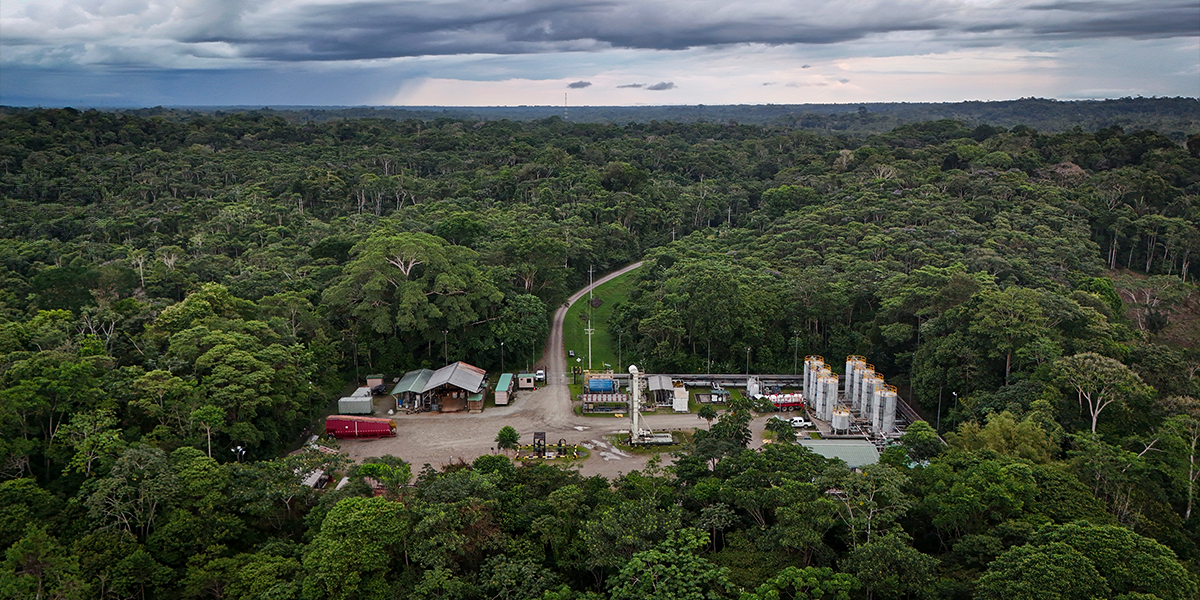
Based in Ecuador, Gente Oil drives exploration and production projects with a focus on technology, operational efficiency, and environmental stewardship, in line with international standards of sustainability and transparency. Its strategy combines digital innovation, social responsibility, and technical excellence, demonstrating that the future of oil can also be smart, ethical, and sustainable.
Because while many talk about the end of oil, Gente Oil Ecuador is working on its transformation.
Sources Cited
- Deloitte (2025) – Oil & Gas Industry Outlook
https://www.deloitte.com/us/en/insights/industry/oil-and-gas/oil-and-gas-industry-outlook.html
- International Energy Agency (IEA) – Oil 2025 Report
https://iea.blob.core.windows.net/assets/c0087308-f434-4284-b5bb-bfaf745c81c3/Oil2025.pdf
- ExxonMobil – Global Outlook: Oil and Gas Investment Is More Important Than Ever
- International Energy Agency – Oil Market Report (September 2025)
https://www.iea.org/reports/oil-market-report-september-2025
- Energy Workforce & Technology Council – Navigating the Future: Key Trends Shaping the Oil and Gas Industry in 2025
- arXiv (2024) – Applications of Artificial Intelligence in the Oil and Gas Industry
https://arxiv.org/abs/2406.00594
Gente Oil Ecuador